Why does the visit matter so much?
Because sponsors have learned that site estimates are unreliable. In a typical trial, 11% of sites enroll no one and 37% under enroll (Tufts CSDD), and Getz reports even adjusted feasibility estimates are accurate less than 10% of the time by sponsor accounts (Applied Clinical Trials). The visit is where a sponsor tests your claims in person.
What does the visitor look at?
- The investigator: experience in the indication, time available, and engagement. Sponsors want PIs as invested in the indication as they are (Bourne Partners).
- The coordinator team: who will run the study, their workload, and backup coverage.
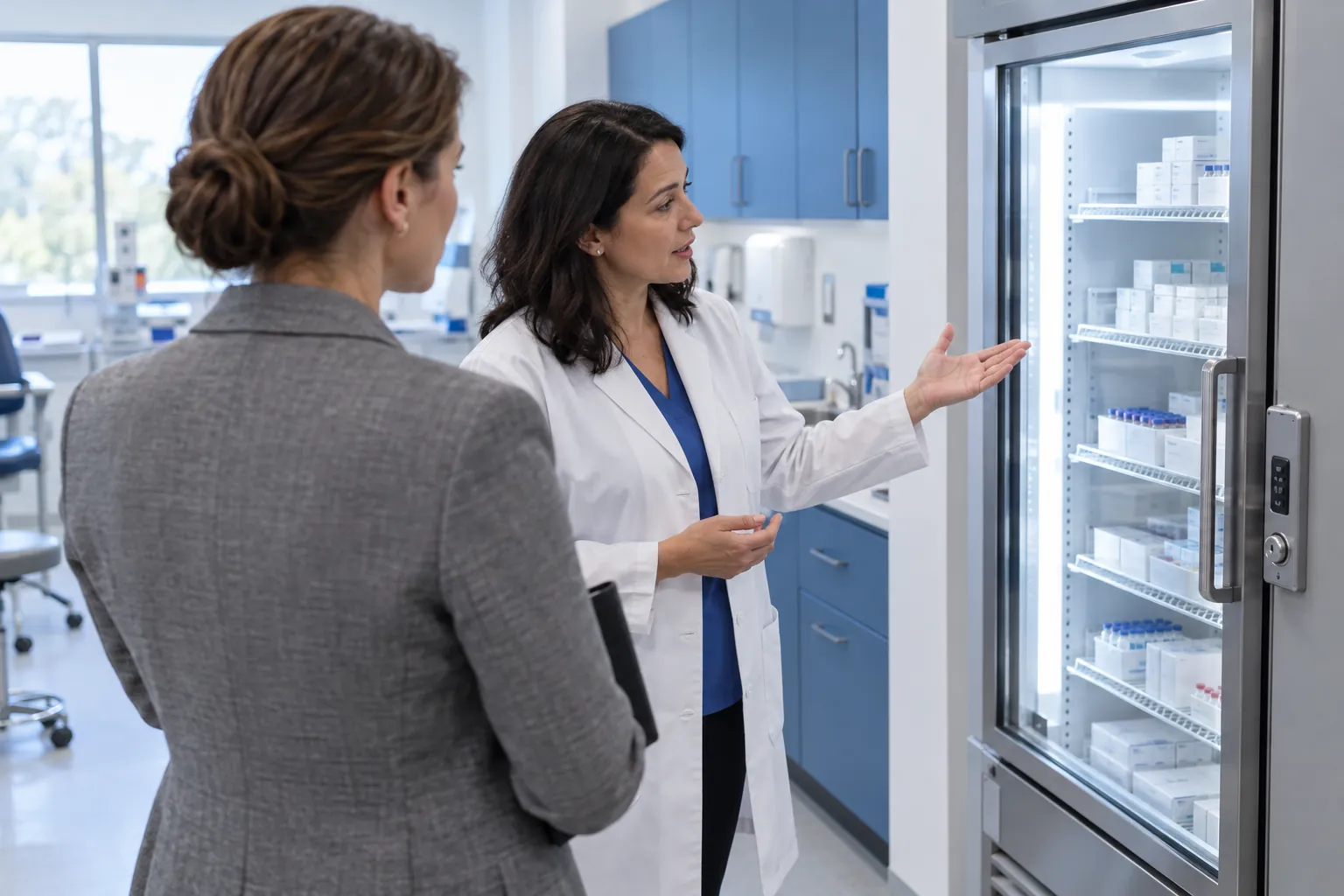
- Facilities: exam rooms, secure and temperature controlled drug storage, lab processing, and equipment the protocol needs.
- Systems and SOPs: source documentation, CTMS, and regulatory files.
- Compliance history and audit readiness.
- Patient access: where eligible patients will come from, and how many.
What do sponsors already know before they arrive?
Often your track record. Through the Investigator Databank and IQVIA's Data Query System, nearly 20 sponsor companies share historical site performance, including enrollment rates and startup times (IQVIA). See site performance data that follows you.
How do you prepare?
- Have the PI present for the key conversation, not just a hello.
- Walk the visitor through the patient flow, from check in to sample shipping.
- Bring a one page patient access summary: record counts for the key criteria, and named referral sources.
- Invite them to meet staff and investigators; sponsors at SCRS recommended exactly that (Bourne Partners).
What makes patient access believable?
Specifics. "We see many of these patients" is what every site says. "Our records show 140 patients meeting the first three criteria, and 12 local rheumatology and primary care practices referred to our last two studies" is evidence. Familiar sites that deliver are chosen again and finish startup 9.9 weeks faster (Tufts CSDD).
Get your study in front of the right local physicians
TrialNotice builds a physician referral pipeline around one active study. We identify relevant local physicians within driving distance of your site, send study aligned direct mail, follow up by email and LinkedIn, track engagement with recipient level QR codes, and route warm responses into your site team's workflow.
Talk to TrialNoticeSources
- Bourne Partners, "Update on the Fundamentals of Clinical Trial Sites" (SCRS Global Site Solutions Summit takeaways, October 2025)
- IQVIA, "Today's Investigator Databank and DQS: Welcoming the Next Generation of Consortium Members" (2025)
- Getz K., "Is Investigative Site Feasibility Feasible?" Applied Clinical Trials
- Tufts CSDD, patient recruitment and retention practices study (Jan 2013), via Fierce Biotech
- Tufts CSDD, first comprehensive clinical site initiation benchmark (2018), via GlobeNewswire